From the entranceto the final frame.
Record the inspection in the order the work happens, with structured observations for comparison and notes for everything unusual.
- Structured workflow
- Notes and photos
- Follow-up reminders
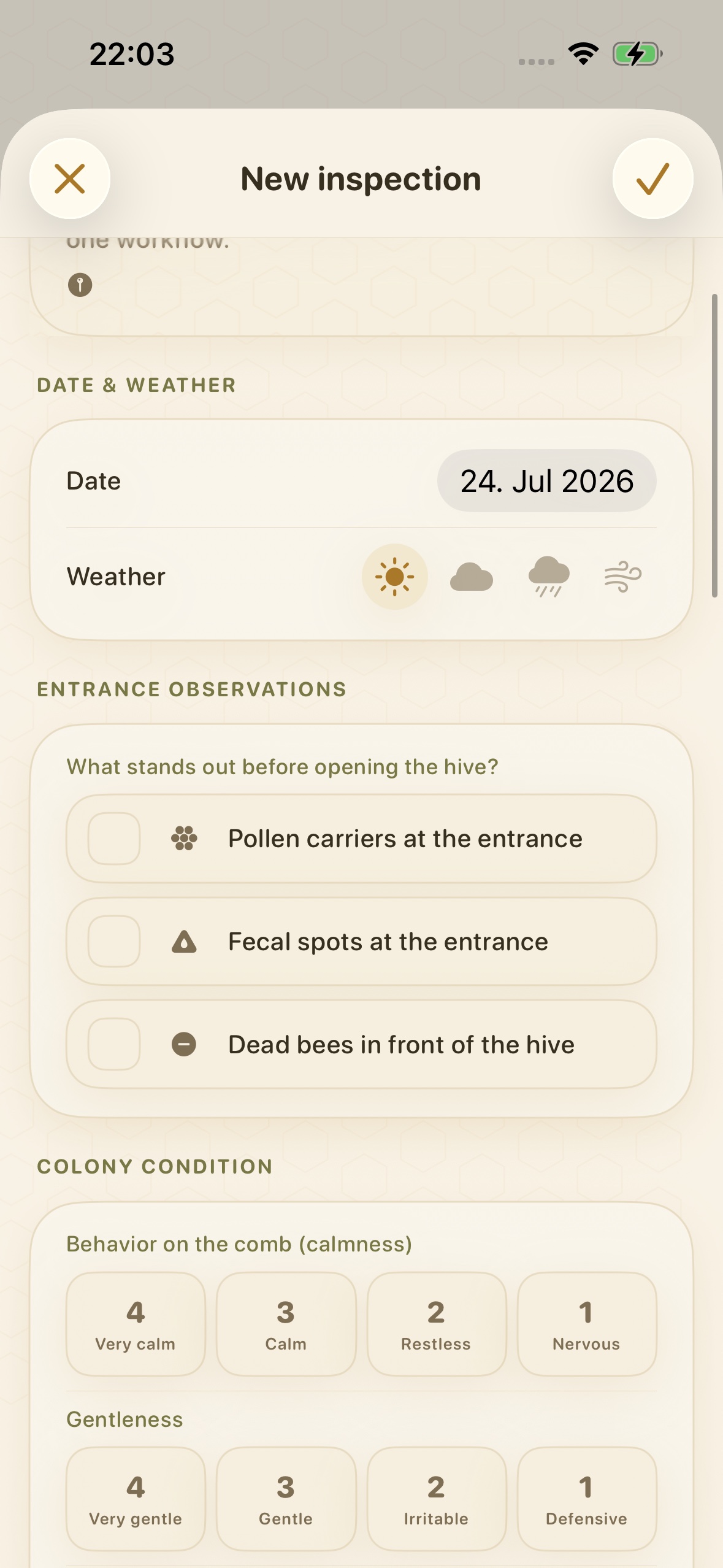
The inspection starts before the hive is opened.
Entrance activity, pollen, dead bees and unusual signs can provide useful context. BeeReady then continues through temperament, brood, queen signs, stores and swarm indicators.
- ✓Before openingEntrance activity and visible warning signs.
- ✓Inside the colonyBrood, queen signs, occupied seams, stores and swarm indicators.
- ✓After the inspectionActions, notes, photos and the next task.
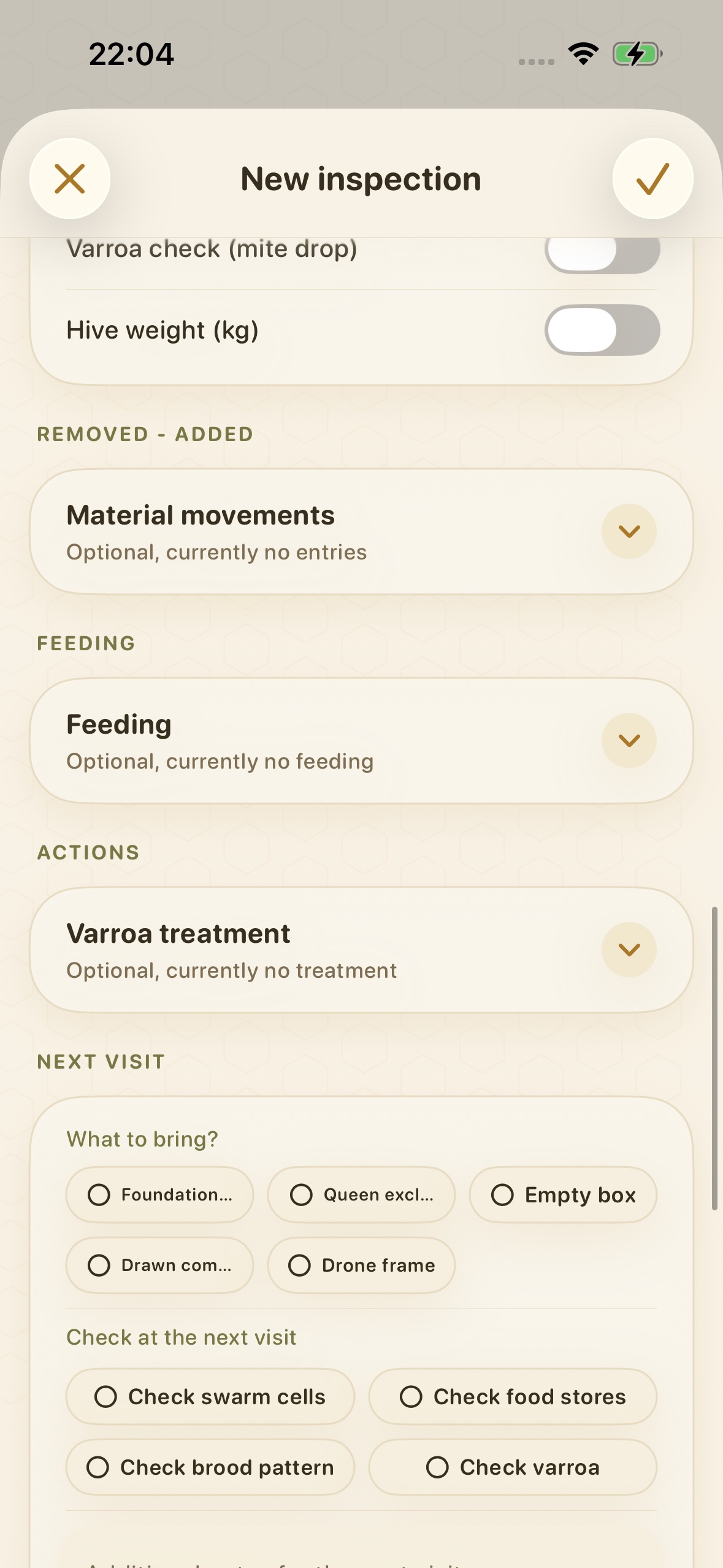
Turn an observation into the next action.
Create a colony-linked reminder for another brood check, feeding, Varroa count or other follow-up work while the context is still clear.
- ✓Keep the reasonThe reminder remains linked to the colony.
- ✓Document evidenceAdd notes and photos to the inspection.
- ✓Compare seasonsReview the history by beekeeping year.
Comparable observations without losing flexibility.
Entrance
Pollen, dead bees and visible abnormalities.
Queen and brood
Queen seen, eggs, larvae and brood pattern.
Frames and seams
Occupied seams, brood frames, stores and total frames.
Notes and photos
Keep unusual observations in context.
Frequently asked questions about colony inspections.
What can I record during an inspection?
The guided flow covers entrance observations, temperament, brood pattern, queen signs, occupied seams, frame counts, stores, swarm indicators, Varroa observations, actions, notes and photos.
Can an inspection create a reminder?
Yes. Follow-up work can be saved as a reminder linked to the colony, so the next check remains visible.
Are older inspections kept?
Yes. Inspections remain part of the colony history and can be viewed by beekeeping year.
Explore more of BeeReady
Record the next inspection at the hive.
BeeReady keeps the result with the correct colony.