
Check before you travel
Look at the hourly windows for the apiary location before packing equipment, not only the forecast for where you live.
BeeReady evaluates temperature, wind and precipitation in hourly windows and relates them to practical work at the apiary.
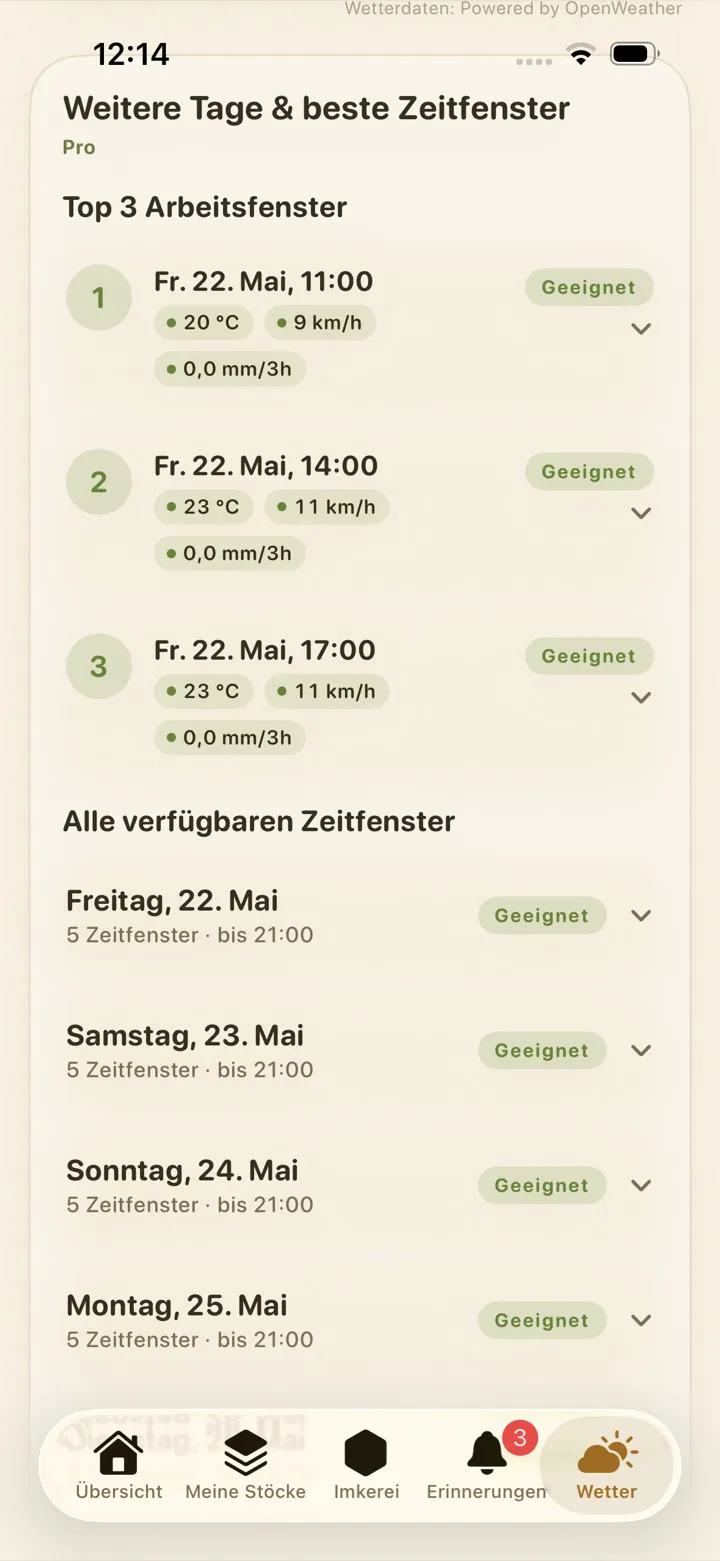
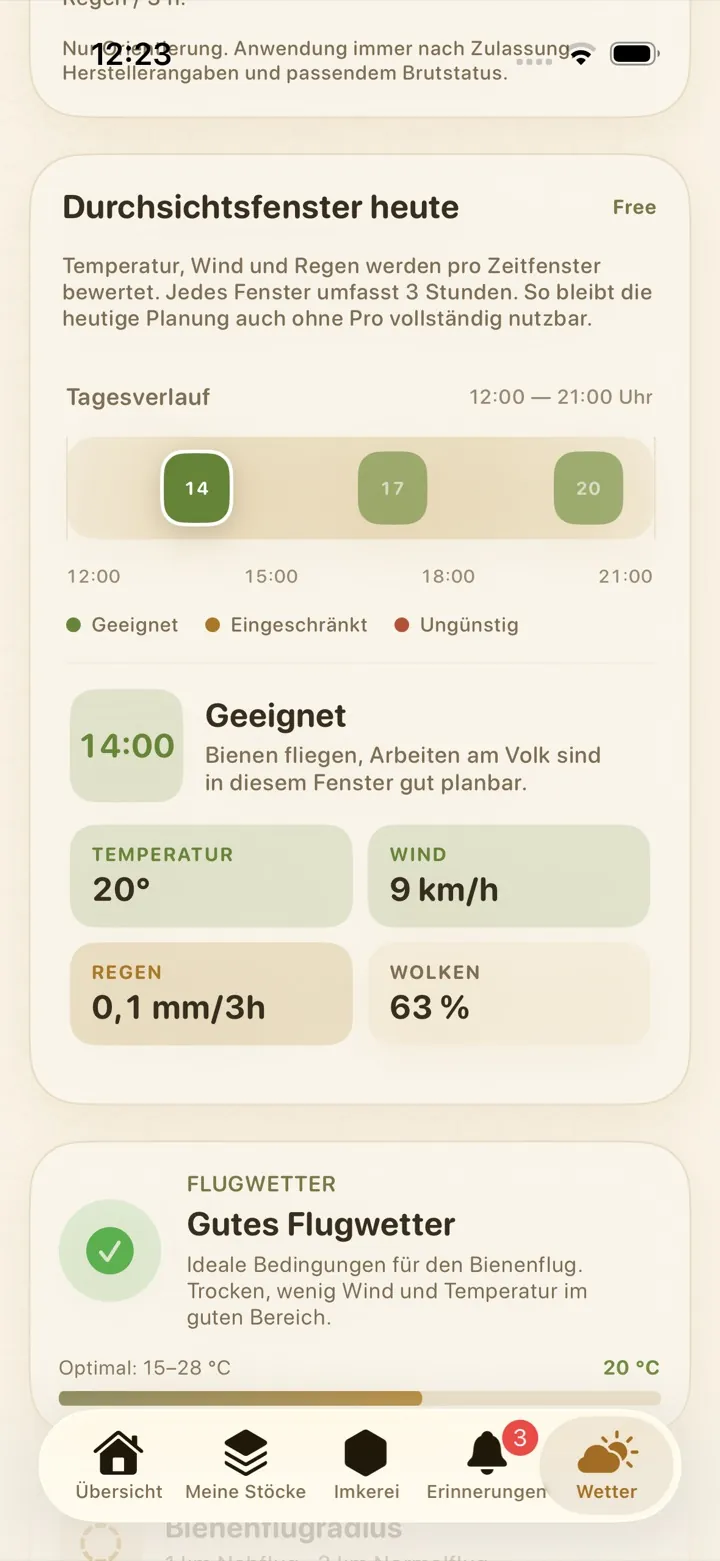
A single daily value can hide the short period that actually matters. BeeReady keeps hourly conditions visible and explains why a window is suitable, limited or unfavourable.
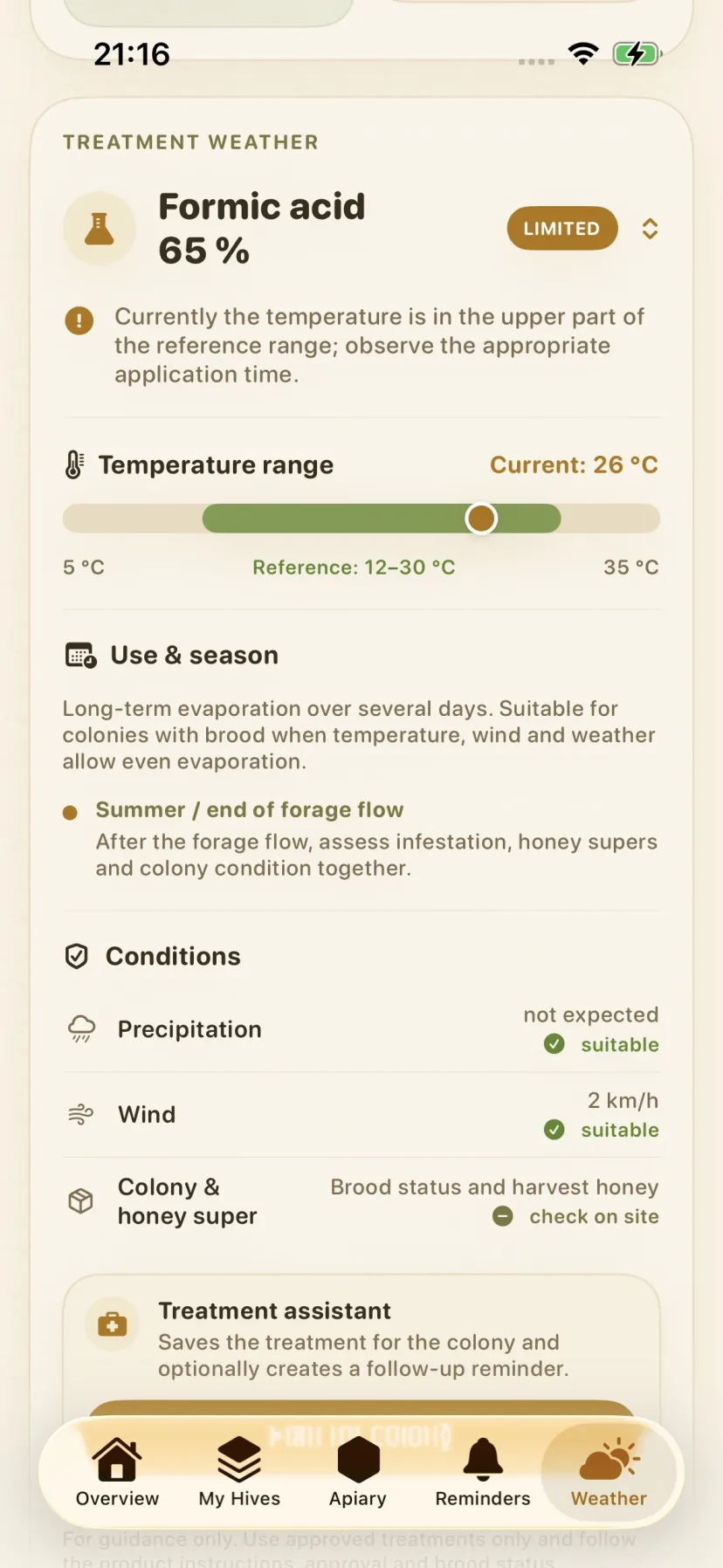
The treatment module explains relevant weather conditions and seasonal context for the selected method. It remains guidance only: approval, product label, brood status and on-site conditions take precedence.
Opening a colony cools the brood nest and disturbs the bees. Temperature, wind and rain decide whether that is reasonable. A daily forecast of 17 °C can hide a cold, windy morning and a short mild window around midday, which is exactly the period that matters at the hive.
BeeReady evaluates every hour separately. Temperature is compared with typical flight thresholds, wind and gusts with conditions that make frame handling difficult, and precipitation with the time you actually plan to be at the apiary. Each apiary keeps its own location, because a site at the edge of a forest can behave quite differently from one in open fields.
Look at the hourly windows for the apiary location before packing equipment, not only the forecast for where you live.
The rating explains its reasons. It does not replace looking at the sky and the colony on site.
With several sites, the same day can be good at one apiary and unfavourable at another.
Compare several possible hours instead of one daily average.
Check the apiary location before packing equipment.
Keep separate locations and conditions visible.
Bees noticeably start leaving the hive at around 10–12 °C, and lively flight usually begins between 15 and 18 °C. Below about 10 °C the colony stays almost entirely inside, so opening it is rarely a good idea. BeeReady highlights the hours above that threshold instead of showing only a daily average.
As a rule of thumb, work at an open hive becomes restless from around 20 km/h or noticeable gusts: frames are harder to hold steady and colonies tend to be more defensive. BeeReady combines wind with temperature and precipitation and shows the calmest hours of the day.
Forecasts are delivered by the BeeReady weather service, which is based on OpenWeather. Postcodes and locations are resolved through Nominatim and OpenStreetMap. Microclimate at your apiary can still differ, so check conditions on site before opening a colony.
BeeReady combines temperature, wind and precipitation in hourly windows. The result is guidance for planning an inspection, not a substitute for checking the conditions at the apiary.
A mild daily average can hide a cold morning, a short dry period or strong afternoon wind. Hourly windows make the usable part of the day easier to recognise.
Yes. Each apiary can have its own location, which makes it easier to compare conditions across sites.
BeeReady combines weather guidance with your colony records.